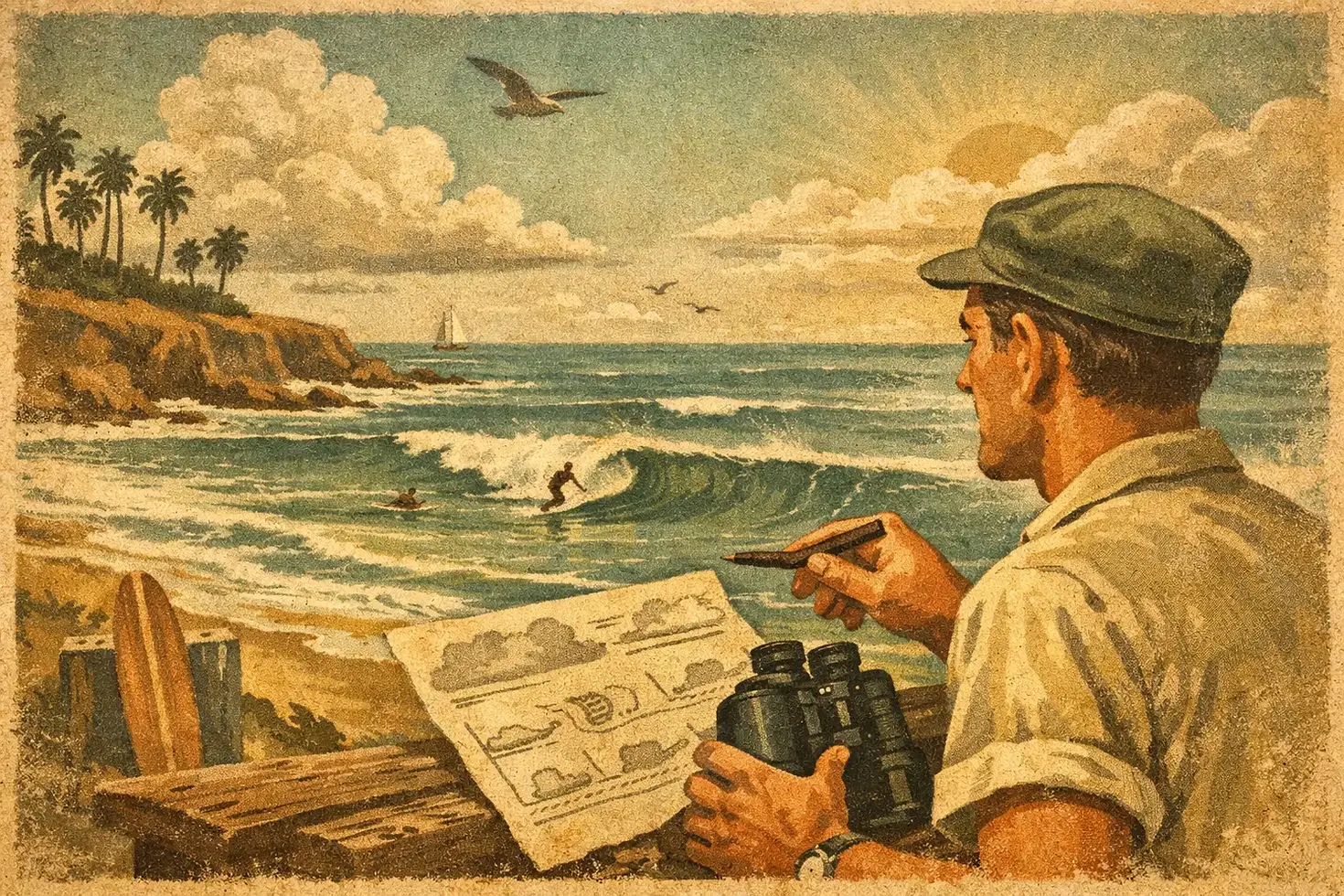
How to Read Surf Conditions Before You Go
You can drive past the ocean at breakfast, see clean blue water, and still end up in the wrong spot for your level an hour later. That is why learning how to read surf conditions matters. It is not about sounding technical in the lineup. It is about choosing waves that are safer, more fun, and better matched to your ability, whether you are taking your first lesson or planning a session around the best window of the day.
For most surfers, especially on vacation, the goal is simple: find conditions that let you enjoy the ocean instead of fighting it. The good news is that reading a surf report gets much easier once you know what actually changes the wave. You do not need to memorize every chart. You just need to understand the big four: swell, wind, tide, and the shape of the break itself.
How to Read Surf Conditions Without Overcomplicating It
A surf forecast can look busy at first. There are numbers for swell height, swell period, swell direction, wind speed, wind direction, and tide swings. It is tempting to focus on just one number, usually wave height, but that almost always leads to bad calls.
A chest-high day at one beach can be smooth and welcoming. The same size at another break can feel fast, steep, and way too much for a beginner. Conditions only make sense when you read the full picture together.
Start with this mindset: swell tells you what energy is arriving, wind tells you what the surface will look like, tide changes how the wave breaks, and the bottom contour decides how all of that turns into a rideable wave. Once you see those pieces as connected, forecasts become much more useful.
Swell: The Engine Behind the Waves
Swell is the energy moving across the ocean from distant or regional storms. When surfers talk about a spot "getting swell," they mean enough wave energy is arriving from the right direction to make that break work.
The first number most people notice is swell height. That matters, but it is only part of the story. A 3-foot swell with a long period can have much more power than a 4-foot swell with a short period. Period is the time between waves, measured in seconds. In general, a longer period means more energy and more organized sets.
If you are new to this, think of it like this: short-period swell often feels weaker, messier, and more local. Long-period swell tends to produce stronger, cleaner, better-defined waves, but it can also make spots break harder than you expect. That is one reason a forecast that looks manageable on paper can feel far more advanced in the water.
Direction matters just as much. Not every break receives every swell equally. Some spots love south swell. Others need west or northwest angle to turn on. A point break may groom a certain direction beautifully, while a nearby beach break closes out under the same pulse. This is where local knowledge makes a huge difference, especially in places with several surf options packed into one coastline.
Wind Can Make or Break a Session
If swell is the engine, wind is the quick reality check. It can take good incoming swell and clean it up, or ruin it.
Offshore wind blows from land toward the ocean. That usually helps hold the face of the wave up, making it cleaner and more shaped. Light offshore can be excellent. Too much offshore wind, though, can make waves difficult for beginners because the lip may stay up longer and the takeoff can feel less forgiving.
Onshore wind blows from the ocean toward land. That tends to add chop and texture, making waves softer in some cases and messy in others. Strong onshore often means a bumpy surface and less organized peaks. For first-timers, that can make timing much harder.
Cross-shore wind sits somewhere in between. Sometimes it is manageable. Sometimes it warps the shape enough to make the session frustrating. This is one of those "it depends" areas. A protected cove may stay pretty clean in moderate wind, while an exposed beach gets blown out quickly.
Morning is often better because winds are lighter before the day heats up. That is not a rule everywhere, but it is common enough that early sessions are popular for a reason.
Tide Changes More Than Most Beginners Expect
Tide is one of the biggest reasons a break can look perfect at one hour and disappointing a few hours later. Water moving in or out changes how waves interact with the sandbar, reef, or point.
Some spots work best on a mid tide because there is enough water to smooth the takeoff while still letting the swell stand up. Others need higher tide to soften things up. Some breaks get too fat at high tide and only start breaking properly as the tide drops. There are also spots that become hazardous when the water gets too low, especially over reef or rock.
This is why asking "Is it good today?" is not always enough. A better question is "When is it best today?" The answer may be 7:30 a.m. to 9:00 a.m., not the whole day.
For travelers, this is one of the most helpful habits to build. Check the forecast, but also notice the tide window. A promising swell can miss your level completely if you paddle out at the wrong stage of the tide.
How to Read the Wave Itself From the Beach
Forecasts help, but your eyes still matter. Before you paddle out, spend a few minutes watching the ocean.
Look first at where the waves are breaking. Are there clear peaks with lefts and rights, or is the whole thing closing out at once? A closeout can be fine for body surfing, but it is not ideal if you want long rides or a mellow lesson.
Then watch the surfers already out. Are they catching waves consistently, or sitting wide and getting caught inside? Are beginners managing the takeoff, or only advanced surfers making the drop? Real-time lineup behavior tells you a lot.
Notice the rhythm of the sets. If every five minutes a much larger cleanup set swings through, that matters. A lineup can look friendly between sets and still be too powerful for newer surfers.
Also pay attention to currents. If surfers are drifting quickly down the beach, there is likely a lateral sweep. If whitewater is pushing hard through the inside, getting back out may take more effort than expected. Strong current is tiring, and fatigue changes good decision-making fast.
Matching Surf Conditions to Your Skill Level
This is where many people get tripped up. Good surf does not always mean good surf for you.
If you are a beginner, the best conditions are usually smaller, cleaner waves with a gentle shoulder and manageable paddle-out. You want time to pop up, stable whitewater or mellow green waves, and enough consistency to practice. Bigger is not better when you are learning.
If you are an improving surfer, you may want slightly more size and shape, but still with predictable peaks. Clean surf with moderate power is often the sweet spot for progression.
If you are experienced, you may actively look for more swell energy, more performance shape, or specific wind and tide windows that make a certain break come alive. Even then, there are trade-offs. A powerful long-period swell can offer great rides, but crowding, current, or a tricky entry may still make another spot the smarter call.
A Simple Way to Check Conditions Before Any Session
If you want a practical routine for how to read surf conditions, keep it simple. First, check swell size, period, and direction. Next, check wind speed and direction for the time you plan to surf. Then look at tide and ask how that spot usually reacts at that stage. Finally, confirm it with your own beach check before getting in.
That process takes only a few minutes once you know what you are looking for. It also saves wasted sessions.
In a destination with multiple break options, this matters even more. A guided local session can shorten the learning curve because the right wave for a family lesson is often different from the right wave for an experienced surfer looking for a quality ride. Around Punta Mita, that local read on tides, exposure, and wind can be the difference between simply going to the beach and actually scoring the right conditions for your day.
Common Mistakes When Reading Surf Reports
The most common mistake is chasing the biggest number. Bigger surf is not automatically cleaner, safer, or more enjoyable.
Another mistake is ignoring period. Two forecasts with the same wave height can surf very differently depending on how much energy is packed into each swell.
People also underestimate wind. A decent swell with poor wind can produce a frustrating session, while modest swell with clean surface conditions can be incredibly fun.
And finally, many surfers forget that each spot has its own personality. There is no universal "good forecast" without knowing the break.
The more you practice, the more intuitive it becomes. Soon you stop seeing random numbers and start seeing a picture: what the ocean is doing, how the wave will likely break, and whether that session fits the experience you want. That is the real skill behind reading surf conditions, and it pays off long before you paddle out.


